Leave A Message
Tips: Kindly notice that reply of inquiry via email may went into spam, please kindly check your spam if you have sent inquiry email and do not receive replies, thank you.

If you’ve walked down a laundry care aisle in the last few years, you’ve seen the shelves lined with laundry pods, many branded as “green,” “eco-friendly,” or “sustainable.” But with so much conflicting information online about their environmental impact, it’s normal to ask: are laundry pods eco-friendly? It’s a critical question in 2026, as more consumers than ever are trying to cut down on household waste, reduce their carbon footprint, and avoid products that harm the planet. Whether you’re a long-time pod user questioning your routine or a new shopper comparing sustainable options, understanding are laundry pods eco-friendly is the first step to building a truly planet-friendly laundry routine. In this section, we’ll break down the basics of laundry pods, the shift in consumer demand driving sustainable laundry trends, and a clear, honest short answer to the core question of are laundry pods eco-friendly, before diving into the full data-driven analysis later in this guide.
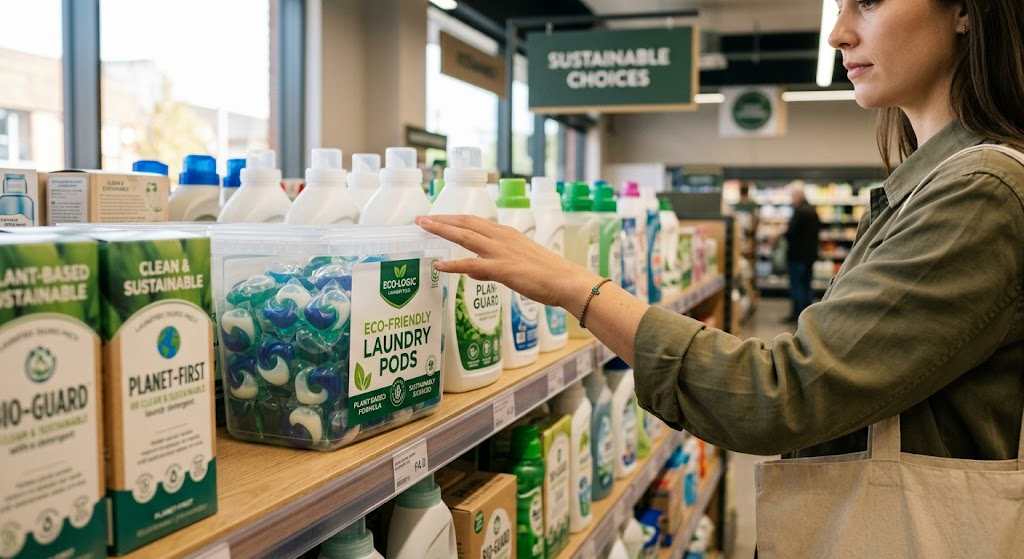
Laundry pods (also called laundry capsules, detergent packs, or laundry sachets) are single-use, pre-measured units of laundry detergent, encased in a thin, water-soluble film. Most pods contain concentrated liquid or powder detergent, and many include added ingredients like fabric softeners, stain removers, or scent boosters. They were first introduced to the mass market in 2012, and quickly became popular for their convenience: no measuring, no messy spills, and a simple toss-and-go format that’s perfect for busy households, college students, and apartment dwellers. Even as their popularity has grown, millions of shoppers still ask are laundry pods eco-friendly every year, as brands make increasingly bold sustainability claims with little transparency.
Today, laundry pods make up nearly 20% of the global laundry detergent market, and that number is growing every year. As demand has risen, brands have launched hundreds of “eco-friendly” pod options, claiming to be better for the planet than traditional liquid or powder detergent. But not all of these claims hold up to scrutiny, which is why it’s so important to understand what’s really in your pods, and how they impact the environment when you’re evaluating are laundry pods eco-friendly.
2026 is a pivotal year for sustainable laundry care, as consumer demand for eco-friendly household products has reached an all-time high. A 2025 NielsenIQ survey found that 78% of global consumers are willing to pay more for household cleaning products that are sustainable, non-toxic, and ethically made. What’s more, 62% of shoppers say they’ve stopped buying a brand entirely after discovering it made false or misleading sustainability claims (also known as greenwashing). This growing demand for transparency is directly tied to the rising number of people asking are laundry pods eco-friendly, as shoppers refuse to take marketing claims at face value.
This shift isn’t just about reducing plastic waste. Consumers are now looking at the full lifecycle of their laundry products: from the ingredients used, to the manufacturing process, to the packaging, to the impact the product has on waterways and ecosystems after it goes down the drain. Laundry pods are at the center of this shift, because they’re marketed as a more sustainable, less wasteful alternative to liquid detergent — but many consumers are starting to ask if that’s really true, and are seeking honest, data-backed answers to are laundry pods eco-friendly.
The short answer to are laundry pods eco-friendly is: it depends. There is no one-size-fits-all answer, because the environmental impact of a laundry pod varies wildly based on its ingredients, the film used to encase it, the packaging, the manufacturing process, and even how you use it.
Some laundry pods are genuinely eco-friendly: they use plant-based, biodegradable ingredients, water-soluble film that fully breaks down in wastewater, plastic-free and compostable packaging, and are made with renewable energy in ethical facilities. These pods can be a more sustainable choice than traditional liquid detergent, especially if you struggle with over-pouring detergent (which is a huge source of waste and water pollution), and they give a clear positive answer to are laundry pods eco-friendly for responsible shoppers.
However, most mass-market laundry pods are not eco-friendly. They contain harmful, non-biodegradable chemicals, use PVA film that doesn’t fully break down in real-world conditions, are packaged in single-use plastic, and are made with fossil fuel-based ingredients. These pods are just as harmful (if not more harmful) to the environment than traditional liquid detergent, despite their “green” marketing claims, and they give a resounding no to the question of are laundry pods eco-friendly.
In the rest of this guide, we’ll break down exactly what makes a laundry pod eco-friendly, how to spot greenwashing, the real environmental impact of pods vs. other detergent formats, and actionable tips to make your laundry routine as sustainable as possible in 2026, so you can answer are laundry pods eco-friendly with total confidence.
To truly answer the question are laundry pods eco-friendly, we need to look at the full lifecycle environmental impact of laundry pods, compared to other common laundry detergent formats. In this section, we’ll use 2026’s latest peer-reviewed research and industry data to break down the four key areas of environmental impact: carbon footprint, water usage and waste, plastic pollution (including the PVA film debate), and chemical impact on waterways and ecosystems. We’ll also include a clear side-by-side comparison table to help you see how pods stack up against liquid and powder detergent, so you can make an informed decision about are laundry pods eco-friendly for your household.
The carbon footprint of a laundry product includes all the greenhouse gas emissions generated during its lifecycle: from sourcing raw materials, to manufacturing, to packaging, to shipping, to use. When it comes to carbon footprint, understanding are laundry pods eco-friendly requires looking at the full lifecycle of the product, not just the end use.
The biggest advantage of laundry pods is their concentrated formula. Liquid laundry detergent is 70-90% water, which means it’s much heavier and bulkier than concentrated pods. This means more trucks are needed to ship the same amount of cleaning power, which generates more greenhouse gas emissions. A 2025 study by the American Cleaning Institute found that concentrated laundry pods have a 15-25% lower carbon footprint from shipping than liquid detergent, because you can fit more cleaning units per truck. This is a key point to consider when evaluating are laundry pods eco-friendly, as shipping emissions are a major part of a product’s total carbon footprint.
However, this advantage can be erased by the manufacturing process. Many mass-market laundry pods use fossil fuel-based ingredients and energy-intensive manufacturing processes, which can increase their carbon footprint significantly. On the flip side, eco-friendly pods made with plant-based ingredients and renewable energy can have a carbon footprint that’s 30-40% lower than traditional liquid detergent, making them a clear sustainable choice when answering are laundry pods eco-friendly.
Water usage and waste are two of the most important factors to evaluate when answering are laundry pods eco-friendly, as they have a direct impact on both resource consumption and waterway pollution. Laundry pods use far less water during manufacturing than liquid detergent: liquid detergent is mostly water, so it requires massive amounts of water to produce, while pods use a concentrated formula with minimal water. This is a major sustainability win for pods, and a key point when researching are laundry pods eco-friendly.
The biggest waste-related advantage of laundry pods is that they eliminate over-pouring. A 2024 study by the Environmental Protection Agency (EPA) found that 60% of Americans pour too much liquid detergent every time they do laundry, using up to 2x the recommended amount. Over-pouring doesn’t just waste detergent — it also sends excess chemicals down the drain into waterways, and can even damage your washing machine over time. Because pods are pre-measured, they eliminate this waste entirely, which is a huge win for the environment, and a major reason many people get a positive answer to are laundry pods eco-friendly.
However, pods do have a waste downside: single-use packaging. Even if the pod itself is biodegradable, most mass-market pods are sold in single-use plastic tubs or bags, which end up in landfills or oceans. Eco-friendly pods that use plastic-free, compostable packaging avoid this issue, but they’re still the minority in the market. This packaging factor is make-or-break when you’re deciding are laundry pods eco-friendly for your own home.
Below is a clear side-by-side comparison of the environmental impact of the three most common laundry detergent formats, based on 2026 industry data, to help you evaluate are laundry pods eco-friendly at a glance:
表格
| Environmental Factor | Laundry Pods (Eco-Friendly) | Laundry Pods (Mass-Market) | Liquid Laundry Detergent | Powder Laundry Detergent (Zero-Waste) |
|---|---|---|---|---|
| Carbon Footprint (Per Load) | Lowest | Medium | Highest | Low |
| Plastic Waste Per Year | None (Compostable Packaging) | High (Plastic Tub + PVA Film) | High (Plastic Bottle) | None (Plastic-Free Packaging) |
| Water Usage (Manufacturing) | Lowest | Low | Highest | Medium |
| Overuse/Waste Risk | None (Pre-Measured) | None (Pre-Measured) | Very High | Medium |
| Waterway Chemical Impact | Low (Biodegradable Ingredients) | High (Toxic, Non-Biodegradable Ingredients) | High | Medium |
The PVA film debate is one of the most contentious topics when determining are laundry pods eco-friendly, and it’s the biggest point of controversy in the sustainable laundry space in 2026. Almost all laundry pods use polyvinyl alcohol (PVA, also called PVOH) film, which is a synthetic polymer that dissolves in water. Brands claim this film is “biodegradable” and “plastic-free,” but there’s a huge amount of debate about whether PVA is actually safe for the environment — and 2026’s latest research and regulatory updates have shed new light on the issue, which is critical for anyone asking are laundry pods eco-friendly.
PVA is a synthetic, water-soluble polymer. It’s not technically a plastic in the traditional sense (it doesn’t contain polyethylene or polypropylene), but it is a man-made polymer that requires specific conditions to biodegrade. Brands claim that PVA film fully dissolves and biodegrades in wastewater, but the reality is much more complicated, and this is a key detail to understand when answering are laundry pods eco-friendly.
For PVA to fully biodegrade, it needs to be exposed to specific, specialized bacteria, warm temperatures, and a long retention time in a wastewater treatment plant. A 2022 peer-reviewed study published in the International Journal of Environmental Research and Public Health found that only 60% of PVA from laundry pods fully biodegrades in standard U.S. wastewater treatment plants. The remaining 40% passes through the plant untreated, and ends up in rivers, lakes, and oceans, where it can accumulate in the ecosystem, absorb toxic chemicals, and be ingested by marine life. This is a critical finding for anyone asking are laundry pods eco-friendly, as it means most PVA film does not fully break down as brands claim.
In 2026, new research has confirmed these findings: a study by the University of California, Santa Barbara, found that PVA from laundry pods is now one of the most common synthetic polymers found in freshwater systems in the U.S. This doesn’t mean all PVA film is bad: some eco-friendly brands use modified PVA film that has been independently tested to fully biodegrade in standard wastewater conditions, even in cold water. But these brands are the exception, not the rule, and this is a key distinction to make when evaluating are laundry pods eco-friendly.
In 2026, regulators around the world are starting to crack down on misleading PVA claims, which is a huge win for consumers trying to get an honest answer to are laundry pods eco-friendly. The European Union’s REACH regulation now requires brands to provide independent proof that their PVA film fully biodegrades in real-world wastewater conditions, before they can label it as “biodegradable” or “eco-friendly.” In the U.S., the FTC has updated its Green Guides to clarify that brands can’t claim PVA is “plastic-free” or “biodegradable” without independent, real-world testing to back it up.
This is a huge win for consumers, as it means brands can no longer make unsubstantiated claims about their PVA film. If you’re looking for eco-friendly laundry pods and trying to answer are laundry pods eco-friendly, you should always ask the brand for independent third-party test results proving that their PVA film fully biodegrades in standard wastewater conditions.
The chemical makeup of the detergent inside the pod is a make-or-break factor when deciding are laundry pods eco-friendly, as it has a direct and lasting impact on waterways, aquatic ecosystems, and even human health. When you do laundry, the detergent goes down the drain into wastewater treatment plants, and any non-biodegradable or toxic chemicals end up in waterways, where they can harm aquatic life, disrupt ecosystems, and even contaminate drinking water. This is one of the most important factors to evaluate when answering are laundry pods eco-friendly.
Most mass-market laundry pods contain a long list of harmful chemicals that are bad for the environment, including:
These chemicals make mass-market pods a poor choice for the environment, and they give a clear no to the question of are laundry pods eco-friendly.
Truly eco-friendly laundry pods avoid all of these harmful ingredients, and use plant-based, biodegradable, non-toxic ingredients that are safe for waterways and aquatic life. Many also meet the EPA’s Safer Choice standard, which means every ingredient has been evaluated for safety and environmental impact. For more information on choosing safer laundry products and answering are laundry pods eco-friendly, you can visit the EPA’s official Safer Choice laundry guide, which provides up-to-date, science-backed guidance for consumers.
Now that we’ve broken down the full environmental impact of these single-use detergent units, it’s time to define exactly what makes a laundry pod truly eco-friendly, and what standards you should look for when answering are laundry pods eco-friendly for your own home. In 2026, there are four non-negotiable standards that a laundry pod must meet to be considered genuinely sustainable, not just marketed that way. These standards are based on the latest regulatory updates, peer-reviewed research, and guidance from leading environmental organizations, and they’ll help you cut through greenwashing and find pods that are actually good for the planet, so you can answer are laundry pods eco-friendly with total confidence.
Packaging is one of the first things you should evaluate when answering are laundry pods eco-friendly, as it’s one of the most visible sources of waste from laundry products. Most mass-market laundry pods are sold in thick, single-use plastic tubs that are rarely recycled, and end up in landfills or oceans. Truly eco-friendly laundry pods use 100% plastic-free, biodegradable, and/or compostable packaging, which eliminates this waste entirely. This is a non-negotiable standard when you’re deciding are laundry pods eco-friendly.
The best packaging options for eco-friendly laundry pods include:
Avoid any pods that are sold in plastic tubs, plastic bags, or packaging with a thin plastic lining. Even if the packaging is “recyclable,” only 9% of plastic is actually recycled globally, so the vast majority will still end up in the environment. Truly sustainable brands prioritize plastic-free packaging first, not just recyclable packaging, and this is a key detail to look for when answering are laundry pods eco-friendly.
The ingredients inside the pod are just as critical as the packaging when determining are laundry pods eco-friendly, as they have a direct impact on waterways and aquatic ecosystems long after your laundry cycle ends. Truly eco-friendly laundry pods use 100% plant-based, non-toxic, and fully biodegradable ingredients, with no harmful chemicals that can harm waterways or aquatic life.
When reading an ingredient list for eco-friendly laundry pods and evaluating are laundry pods eco-friendly, look for these things:
If a brand doesn’t list its full ingredient list on its website or packaging, that’s a major red flag. Truly sustainable brands are transparent about what’s in their products, because they have nothing to hide, and this transparency is a key sign when you’re answering are laundry pods eco-friendly.
Third-party certifications are one of the most reliable tools to verify sustainability claims when you’re researching are laundry pods eco-friendly. These certifications are issued by independent, non-profit organizations, and they require brands to meet strict, science-backed standards for sustainability, safety, and transparency. They’re the best way to avoid greenwashing, because brands can’t pay for a certification without meeting the requirements, and they’re a critical resource for anyone trying to answer are laundry pods eco-friendly.
Here are the most trusted third-party certifications to look for in 2026 when evaluating are laundry pods eco-friendly:
Avoid brands that use vague, self-made certifications like “eco-certified” or “green approved” — these are almost always greenwashing, with no independent verification behind them. Stick to the trusted, well-known certifications listed above when you’re answering are laundry pods eco-friendly.
Ethical manufacturing and carbon-neutral operations are often overlooked factors when answering are laundry pods eco-friendly, but they play a huge role in a product’s total environmental footprint. Truly eco-friendly laundry pods don’t just have sustainable ingredients and packaging — they’re also made in a sustainable, ethical way. The manufacturing process is a huge part of a product’s environmental impact, and sustainable brands prioritize reducing their carbon footprint, using renewable energy, and treating their workers fairly.
When evaluating a brand’s manufacturing practices and answering are laundry pods eco-friendly, look for these things:
Many sustainable brands also give back to environmental organizations, donating a percentage of their profits to reforestation, ocean cleanup, or climate action initiatives. This isn’t a requirement for a product to be eco-friendly, but it’s a good sign that the brand is committed to environmental protection beyond just its products, and it’s a positive indicator when you’re answering are laundry pods eco-friendly.
Greenwashing is the biggest barrier to getting an honest answer to are laundry pods eco-friendly in 2026, as brands use misleading marketing to make their products seem more sustainable than they really are. Brands know that consumers are willing to pay more for sustainable products, so they use misleading marketing language, vague claims, and deceptive packaging to make their products seem more eco-friendly than they really are. When you’re asking are laundry pods eco-friendly, it’s critical to be able to spot these greenwashing traps, so you don’t waste money on products that don’t deliver on their sustainability promises. In this section, we’ll break down the top 5 greenwashing red flags for laundry pods in 2026, and how to verify a brand’s sustainability claims, so you can get a truthful answer to are laundry pods eco-friendly.
These red flags will help you quickly spot misleading claims and avoid products that don’t deliver on their promises when you’re investigating are laundry pods eco-friendly.
Spotting greenwashing is only half the battle; you also need to know how to verify a brand’s claims to get a truthful answer to are laundry pods eco-friendly. Here are 3 simple steps to verify any brand’s sustainability claims in 2026, so you can answer are laundry pods eco-friendly with total confidence:
Even if you’ve found a pod that checks all the boxes when answering are laundry pods eco-friendly, the way you use your pods has a massive impact on their total environmental footprint. In fact, 90% of the energy used during the laundry lifecycle comes from heating water for washing, which means small changes to your laundry routine can have a bigger environmental impact than switching detergent formats. If you’ve decided that laundry pods are the right choice for your household, and you’ve gotten a positive answer to are laundry pods eco-friendly for your chosen product, here are 7 tips to use them in the most eco-friendly way possible in 2026.
After learning all the factors that go into answering are laundry pods eco-friendly, you may be wondering if pods are the most sustainable option for your household, or if there are better alternatives available. While truly eco-friendly laundry pods can be a good choice for many households, they’re not the most sustainable option for everyone. If you’re looking to reduce your environmental footprint even further, or you want to avoid PVA film entirely after researching are laundry pods eco-friendly, there are several great eco-friendly laundry pod alternatives available in 2026. In this section, we’ll break down the best alternatives, their pros and cons, and which one is right for your household.
Laundry detergent sheets (also called laundry strips) are the most popular alternative to laundry pods in 2026, especially for shoppers who got a negative answer to are laundry pods eco-friendly for most pod products. They’re thin, lightweight sheets of concentrated laundry detergent, with no PVA film, no plastic packaging, and a very low carbon footprint. Like pods, they’re pre-measured, so they eliminate over-pouring and waste, and they’re just as convenient to use: just toss one sheet into the drum of your washing machine with your clothes.
Pros of laundry detergent sheets:
Cons of laundry detergent sheets:
For most households, high-quality, certified eco-friendly laundry detergent sheets are the most sustainable alternative to laundry pods, with all the convenience and none of the PVA film or plastic waste, making them a great choice if you’re not satisfied with the answers you found to are laundry pods eco-friendly.
Powder laundry detergent is the original zero-waste laundry option, and it’s making a huge comeback in 2026, as more consumers look for sustainable, plastic-free laundry solutions after researching are laundry pods eco-friendly. High-quality, eco-friendly powder detergent is made with plant-based, biodegradable ingredients, and it’s almost always sold in plastic-free, compostable packaging, or in bulk for zero-waste shopping.
Pros of zero-waste powder laundry detergent:
Cons of zero-waste powder laundry detergent:
If you’re looking for the most cost-effective, lowest-carbon-footprint laundry option, and you don’t mind measuring your detergent, zero-waste powder laundry detergent is the best choice, especially if you’re not happy with the results of your research into are laundry pods eco-friendly.
If you want to go completely plastic-free and minimize your environmental impact as much as possible after answering are laundry pods eco-friendly, there are several natural laundry alternatives that require no synthetic ingredients, no packaging, and have almost no environmental footprint. These options aren’t as effective at removing heavy stains as detergent pods, sheets, or powder, but they’re a great choice for lightly soiled clothes, and for households that want to minimize their use of synthetic products.
The most popular natural laundry alternatives in 2026 are:
One of the most common questions we get when discussing are laundry pods eco-friendly is whether pods are better for the environment than liquid detergent. It depends on the specific product. Truly eco-friendly laundry pods (with plant-based ingredients, fully biodegradable PVA film, and plastic-free packaging) are better for the environment than traditional liquid detergent, because they have a lower carbon footprint from shipping, eliminate over-pouring waste, and use less water in manufacturing. However, mass-market laundry pods with non-biodegradable ingredients, non-compostable plastic packaging, and PVA film that doesn’t fully break down are not better for the environment than liquid detergent.
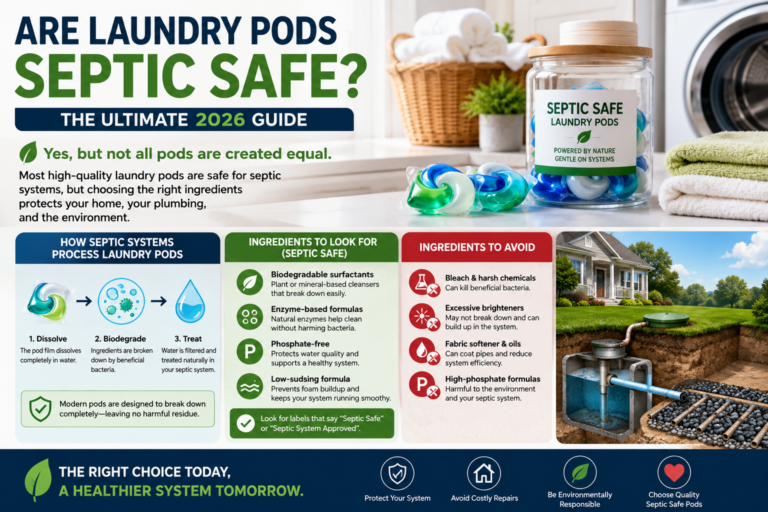
When evaluating are laundry pods eco-friendly, many homeowners with septic systems want to know if pods are safe for their septic tanks. Most laundry pods will dissolve in septic systems, but that doesn’t mean they’re safe for them. Many mass-market laundry pods contain harmful chemicals, non-biodegradable surfactants, and anti-microbial ingredients that can kill the beneficial bacteria in your septic system, which is needed to break down waste. Truly eco-friendly laundry pods are formulated to be septic-safe, with biodegradable ingredients that won’t harm the bacteria in your septic system. Always check the brand’s website to confirm their pods are septic-safe before using them, especially when you’re researching are laundry pods eco-friendly.
The PVA film debate is central to answering are laundry pods eco-friendly, so it’s no surprise this is one of our most frequently asked questions. PVA is not technically a traditional plastic, but it is a synthetic polymer that can be bad for the environment if it doesn’t fully biodegrade. Most mass-market PVA film only partially biodegrades in standard wastewater treatment plants, with up to 40% passing through untreated into rivers, lakes, and oceans, where it can accumulate in the ecosystem. However, some eco-friendly brands use modified PVA film that has been independently tested to fully biodegrade in real-world wastewater conditions, which is safe for the environment. Always ask for independent test results before trusting a brand’s PVA biodegradability claims when you’re answering are laundry pods eco-friendly.
A common misconception when researching are laundry pods eco-friendly is that all “natural” laundry pods are sustainable. No, the word “natural” has no legal or regulatory definition, so brands can use it even if their product contains harmful synthetic ingredients, is packaged in plastic, or has a large carbon footprint. Many “natural” laundry pods are just greenwashing, with vague claims and no proof to back them up. To find a truly eco-friendly laundry pod, look for third-party certifications, full ingredient transparency, plastic-free packaging, and proof of biodegradability for the PVA film, so you can get an honest answer to are laundry pods eco-friendly.
Many people ask about compostability when they’re exploring are laundry pods eco-friendly, wondering if they can dispose of unused pods in their home compost. The pod itself (the detergent and PVA film) cannot be composted, even if it’s biodegradable. PVA film requires water to dissolve and biodegrade, which doesn’t happen in a compost pile. The only part of a laundry pod that can be composted is the outer packaging, if it’s labeled as home or commercial compostable. Never throw the laundry pods themselves into a compost pile, as they won’t break down, and can contaminate your compost with detergent ingredients, even if you thought you got a positive answer to are laundry pods eco-friendly for the product.
With so much greenwashing in the market, one of the top questions we get is how to verify if a brand is truly sustainable when answering are laundry pods eco-friendly. To verify if a laundry pod brand is truly sustainable, look for these four things: 1) Full, transparent ingredient lists with no harmful chemicals; 2) Independent third-party sustainability certifications like EPA Safer Choice or B Corp; 3) Plastic-free, compostable packaging; 4) Independent test results proving their PVA film fully biodegrades in real-world wastewater conditions. You should also look for details about their manufacturing process, supply chain transparency, and carbon reduction efforts to get a full answer to are laundry pods eco-friendly for that brand.
So, are laundry pods eco-friendly? As we’ve covered throughout this guide, the answer depends entirely on the product you choose. There are genuinely eco-friendly laundry pods on the market in 2026: products with plant-based, biodegradable ingredients, fully compostable plastic-free packaging, PVA film that’s been independently tested to break down completely in real-world conditions, and made with renewable energy in ethical facilities. For many households, these pods are a convenient, sustainable choice that eliminates over-pouring waste, reduces carbon footprint, and fits easily into a busy lifestyle.
However, the vast majority of laundry pods on the market are not eco-friendly. They’re full of harmful, non-biodegradable chemicals, packaged in single-use plastic, use PVA film that doesn’t fully break down, and are marketed as “green” with no proof to back up their claims. These products are just as harmful to the environment as traditional liquid detergent, and they’re a classic example of greenwashing.
The good news is that, in 2026, you have more sustainable laundry options than ever before. Whether you choose truly eco-friendly laundry pods, detergent sheets, zero-waste powder, or natural alternatives, the most important thing is to make informed choices that align with your values and your household’s needs. Even small changes to your laundry routine — like washing in cold water, only running full loads, or switching to a sustainable detergent — can have a huge positive impact on the planet over time.
This guide has given you all the tools you need to cut through greenwashing, understand the real environmental impact of your laundry products, and make truly sustainable choices for your home in 2026 and beyond.
Thank you for reading our Are Laundry Pods Eco-Friendly? 2026 Full Guide. We hope this guide has helped you cut through misleading marketing, understand the real environmental impact of your laundry choices, and find the best sustainable solutions for your home. If you have more questions about eco-friendly laundry products, zero-waste household swaps, or how to reduce your home’s carbon footprint, be sure to check out our other comprehensive guides for the latest 2026 tips and research. We’re here to help you make informed, planet-friendly choices every step of the way.