Leave A Message
Tips: Kindly notice that reply of inquiry via email may went into spam, please kindly check your spam if you have sent inquiry email and do not receive replies, thank you.

Buyers often ask for a CE certificate, FDA approval, SGS certificate, or one universal document that makes laundry pods legal everywhere. Unfortunately, laundry pod compliance does not work that way.
There is no single global certificate that automatically authorizes a laundry pod for sale in the United States and the European Union. Instead, laundry pod certifications are a mix of mandatory legal duties, product-specific test evidence, supplier declarations, safety documents, and optional third-party labels. The correct package depends on the formula, fragrance, soluble film, outer packaging, marketing claims, and country of sale.
For example, a normal cleaning claim and an antibacterial claim can place two similar formulas under very different rules. A standard scented laundry pod may be regulated as a household cleaning product. However, a pod promoted as killing bacteria, sanitizing clothes, or controlling microorganisms may also trigger pesticide or biocidal product authorization.
This guide explains which laundry pod certifications buyers should request, which documents are not certifications, and how U.S. and EU compliance differ. It also provides a practical file checklist for OEM/ODM and private-label projects.
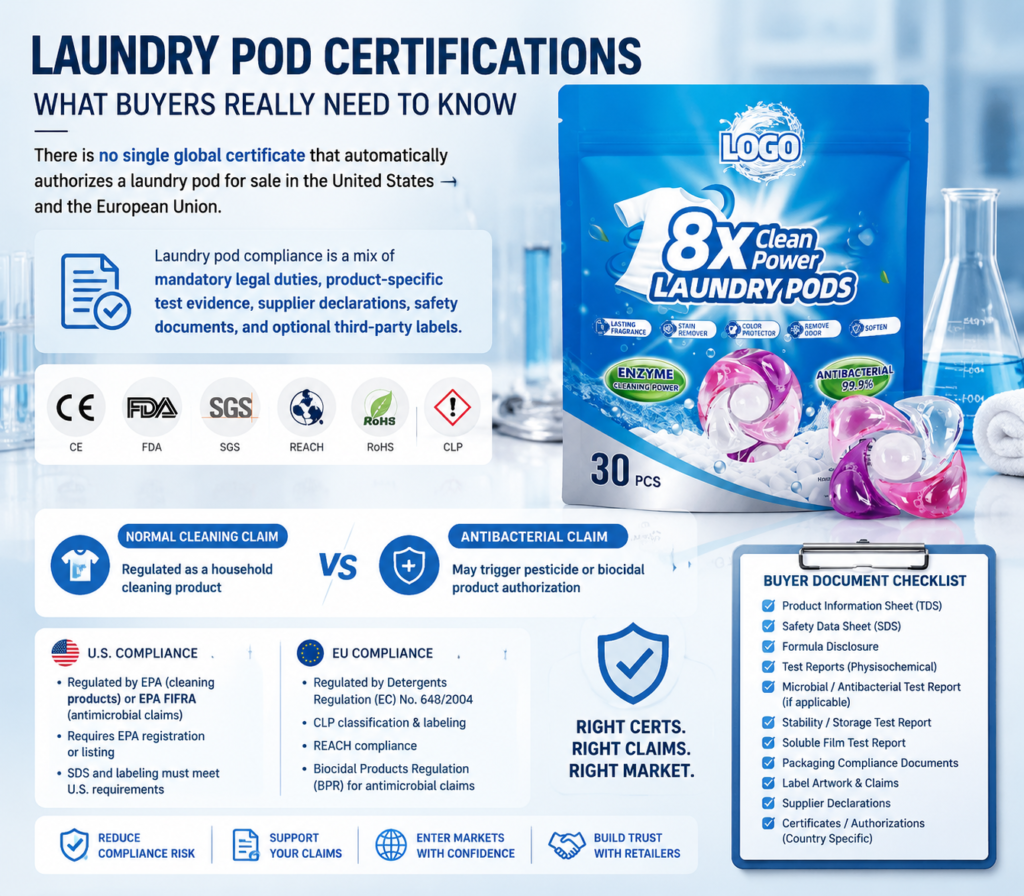
The phrase laundry pod certifications is often used too broadly. A laboratory report, Safety Data Sheet, factory ISO certificate, and government product authorization do not serve the same purpose. Buyers need to know what each document proves and what it does not prove.
Laundry pods are chemical mixtures enclosed in water-soluble film and sold in consumer packaging. Several compliance layers may apply at the same time:
As a result, valid laundry pod certifications for one market may not satisfy another. A U.S. SDS does not replace an EU CLP label. An IFRA fragrance document does not authorize the finished detergent. An ISO 9001 certificate describes a quality management system, but it does not prove that a specific pod formula meets chemical or packaging law.
Buyers can divide laundry pod certifications and related documents into three groups:
| Document Type | Purpose | Typical Examples |
|---|---|---|
| Mandatory legal compliance | Required before sale or import when the rule applies | FHSA label, TSCA import certification, CLP label, UFI and poison centre notification |
| Supporting technical evidence | Helps prove that the formula, packaging, and claims meet requirements | SDS, Certificate of Analysis, stability report, packaging test report, ingredient data |
| Voluntary certification or standard | Supports market positioning, retailer approval, or quality assurance | ASTM F3159 conformity evidence, EPA Safer Choice where eligible, EU Ecolabel, ISO 9001 |
This distinction matters. A voluntary certification can improve trust, but it cannot replace a mandatory obligation. Likewise, a mandatory label is not proof that every performance claim has been tested.
In an OEM project, the factory supplies important data, but the brand owner and importer usually retain major market responsibilities.
For U.S. imports, the importer of record may need to make TSCA declarations and ensure that applicable consumer labeling is correct. In the EU, a non-EU factory cannot take over every REACH, CLP, poison centre, GPSR, and importer duty. An EU-established importer, only representative, manufacturer, or other responsible economic operator must perform the applicable tasks.
Therefore, buyers should not ask only, “Does the factory have laundry pod certifications?” Better questions include:
YCshinec’s OEM/ODM laundry care services can support formula, fragrance, packaging, and documentation development. However, the final compliance plan should always identify the brand owner, importer, and destination-market professional responsible for each legal action.
Before building the file of laundry pod certifications, answer five questions:
Once these answers are fixed, laundry pod certifications become a manageable project rather than a random collection of PDFs.
The United States does not generally require an FDA approval or a special federal detergent license for ordinary laundry pods. Still, a product may fall under several federal and state rules. The final compliance file must be based on the finished formula and claims.
The Consumer Product Safety Commission administers the Federal Hazardous Substances Act, or FHSA. A household product must be evaluated as a finished product for hazards such as toxicity, corrosivity, irritation, sensitization, flammability, or pressure generation.
If a laundry pod meets the FHSA definition of a hazardous household product, its immediate container must carry required cautionary information. Depending on the hazard, this can include:
The CPSC explains that the finished consumer product, rather than isolated raw materials alone, should be evaluated. See the official FHSA cautionary labeling guidance.
A standard SDS or raw-material declaration does not complete this review. The brand should retain the formula, toxicological information, physical data, label assessment, and test basis used to classify the finished product.
For liquid laundry detergent packets, ASTM F3159-15(2022) is the active U.S. voluntary safety specification. It addresses product and package safety intended to reduce accidental exposure, especially among children. It covers liquid-only packets and packets containing liquid plus non-liquid components.
The CPSC identifies ASTM F3159 as the relevant voluntary standard for liquid laundry packets. ASTM states that the specification includes packaging and labeling requirements. Buyers can review the CPSC liquid laundry packet page and the official ASTM F3159-15(2022) summary.
ASTM F3159 is not a universal government approval. However, conformity evidence is highly important for risk control, retailer review, and responsible product design. Ask the supplier or laboratory to identify:
Do not accept a generic statement such as “ASTM certified” without a report linked to the actual pod and outer package.
The Toxic Substances Control Act applies to chemical substances and mixtures imported into the United States. The U.S. Environmental Protection Agency states that imports of chemical substances or mixtures must comply with TSCA and that importers generally make a positive or negative certification at entry, as applicable.
The importer should verify that ingredients are permitted under TSCA and that no ingredient is subject to an unaddressed restriction, significant new use rule, or other requirement. The supplier should provide accurate CAS numbers, ingredient identity information, and regulatory status data needed for the review.
The EPA’s TSCA import requirements make clear that this certification is an importer responsibility. A factory’s commercial invoice statement alone should not be treated as a complete TSCA assessment.
An SDS is one of the most requested laundry pod certifications, but technically it is a hazard communication document, not a product approval.
Under OSHA’s Hazard Communication Standard, chemical manufacturers and importers must evaluate covered workplace chemical hazards and provide labels and SDSs to downstream customers when required. OSHA uses a 16-section SDS format and requires manufacturers and importers to communicate classified hazards.
For OEM buyers, the SDS should:
See the official OSHA Hazard Communication overview and SDS content requirements.
Consumer labels and workplace labels are not automatically interchangeable. FHSA consumer labeling and OSHA hazard communication should be assessed separately.
This is one of the most important compliance dividing lines.
The EPA states that when a cleaning product claims or implies that it prevents, destroys, repels, or mitigates a pest, including microorganisms, it may become a pesticide under FIFRA. Claims such as “sanitizes,” “disinfects,” “kills bacteria,” or “controls germs that cause odors” can trigger pesticide registration.
The rule applies not only to the package. Product pages, catalogs, advertising, social posts, testimonials, and sales materials can also create a pesticidal claim. Read the EPA’s current guidance on when a cleaning product is a pesticide.
A normal cleaning or deodorizing statement may be possible without pesticide registration when it does not imply pest control. For example, “removes stains” and an appropriately framed odor-removal claim are different from “kills odor-causing bacteria.”
Before adding an antibacterial benefit to private-label laundry pods, confirm:
Do not rely on an ingredient supplier’s antimicrobial certificate to authorize the finished laundry pod.
U.S. federal compliance is not always the end of the project.
California’s Cleaning Product Right to Know Act, SB 258, requires covered manufacturers of designated cleaning products to disclose specified ingredient information online and on labels. The law addresses intentionally added ingredients, certain nonfunctional constituents, fragrance ingredients, listed chemicals, and links to the SDS.
Buyers selling in California should map the formula against the disclosure requirements and create a product-specific ingredient page. The official California SB 258 text provides the legal details.
California Proposition 65 should also be screened when the product or package may create an exposure to a listed chemical above an applicable safe-harbor level. A chemical’s presence does not automatically mean a warning is required. The decision depends on exposure, concentration, route, and available safe-harbor information.
Some states and localities also restrict phosphorus in laundry detergents. The target-state list should be reviewed before formula lock.
Words such as “eco-friendly,” “green,” “non-toxic,” “biodegradable,” and “plastic-free” are not casual decoration. The Federal Trade Commission’s Green Guides explain that broad environmental claims can mislead consumers and should be clearly qualified and supported by competent evidence.
The FTC warns that a third-party seal does not remove the marketer’s duty to substantiate express and implied claims. Review the FTC Green Guides summary before approving artwork.
EPA Safer Choice is a voluntary product label, not a basic market-entry requirement. Eligibility depends on the current Safer Choice Standard and product category. Buyers should check current packet eligibility directly with the EPA Safer Choice program instead of assuming that safer ingredients automatically authorize the logo.
The following checklist is a practical starting point:
| Item | Status | Responsible Party |
|---|---|---|
| Finished-formula FHSA hazard assessment | Mandatory when applicable | Brand owner/importer with qualified assessor |
| Compliant consumer warning label | Mandatory when product is hazardous | Brand owner/importer |
| ASTM F3159 product and package evidence | Voluntary but strongly recommended | Factory, brand, and qualified laboratory |
| TSCA ingredient review and import certification | Mandatory for covered imports | U.S. importer of record |
| Current English SDS | Mandatory when OSHA HCS applies; commonly required commercially | Manufacturer/importer |
| FIFRA registration and state registrations | Mandatory if pesticidal claims trigger them | Registrant and marketer |
| California ingredient disclosures | Mandatory for covered products sold in California | Named manufacturer/brand |
| Claim substantiation reports | Required to support advertising | Brand owner/marketer |
| COA and batch specification | Commercial quality evidence | Factory |
| Product liability and recall plan | Strongly recommended | Brand owner/importer |
Certain regulated general-use products require a CPSC General Certificate of Conformity. CPSC also began expanded electronic certificate filing for many regulated imports on July 8, 2026. Whether a laundry pod shipment needs a GCC and eFiling depends on the specific CPSC-enforced rule that applies to that product. Importers should check the current CPSC GCC guidance rather than issuing an unsupported certificate.
EU laundry pod compliance is more structured than a simple certificate request. The formula, mixture classification, soluble packet, outer packaging, label, poison centre notification, ingredient disclosure, and responsible economic operator must work together.
As of July 2026, buyers need to understand two detergent regulations:
The EU’s official summary states that Regulation 648/2004 is repealed from September 23, 2029, with transitional provisions for products placed on the market around the changeover. Buyers can review the official summary of Regulation EU 2026/405 and the full legal text.
Therefore, a 2026 compliance file should meet today’s applicable rules while preparing product data and technical records for the 2029 transition. Do not redesign labels around the future regulation without checking its application dates and transitional clauses.
REACH regulates chemical substances manufactured or imported into the EU/EEA. Laundry pods are mixtures, but the substances inside them remain subject to REACH duties.
The EU importer or an appointed only representative may need to address substance registration and supply-chain obligations. The formula should also be screened for:
ECHA explains that a company importing a mixture from outside the EU/EEA is likely to have REACH responsibilities. A non-EU factory may appoint an EU-based only representative for certain duties, but this must be established and documented. See ECHA’s Understanding REACH.
REACH compliance is not proved by a one-page statement saying “REACH certified.” Buyers should request substance identity data and a signed regulatory declaration that clearly identifies the formula, legal entities, and basis of compliance.
The Classification, Labelling and Packaging Regulation, or CLP, requires hazardous mixtures to be classified and labeled before being placed on the EU market.
A CLP assessment can determine:
The classification must cover the finished mixture. It should use current supplier data, harmonized classifications, concentration limits, and relevant test information. A Chinese GHS SDS cannot simply be copied onto an EU label.
The label must also use the language or languages required by each destination Member State. Multi-country launches need an approved language matrix and sufficient label space.
Liquid consumer laundry detergents in soluble single-use packaging have additional requirements under CLP Annex II, introduced by Commission Regulation (EU) No 1297/2014.
The outer package must meet specific conditions, including:
The soluble packet itself must:
These are not optional design suggestions. They are explicit EU packet requirements. Buyers should review the official Regulation EU 1297/2014 text.
The test report should identify the film, formula, pod weight, chamber design, outer package, test conditions, and exact production version. A passing report for a different formula or pouch design should not be reused without technical justification.
Hazardous mixtures within scope require a Unique Formula Identifier, or UFI, and a harmonized poison centre notification under CLP Annex VIII.
The UFI connects the product name on the label with submitted composition and toxicological information. ECHA states that a product bearing an unnotified UFI is not compliant. The notification must be valid before the product is placed on the market.
The notification file can require:
Each materially different formula must be managed correctly. Fragrance or color variants should be assessed to determine whether they can share a UFI under the applicable rules.
Use ECHA’s official guide to generate and apply the UFI. A UFI printed on a mockup is not proof of a valid submission. Ask for the notification confirmation and scope.
Under the current Detergents Regulation 648/2004, detergent suppliers must address surfactant biodegradability, ingredient labeling, fragrance allergen disclosure, dosage information, and ingredient information made available through a website and to medical personnel.
For consumer laundry detergents, the label commonly needs percentage-range disclosure for specified ingredient classes, named preservatives, enzymes, disinfectants, optical brighteners, perfumes, and applicable fragrance allergens. Dosage instructions and the number of standard washes also require review.
Consumer laundry detergents are also subject to limits on total phosphorus in the recommended dose. Buyers can consult the consolidated Regulation EC 648/2004 and ECHA’s detergent content-labeling reference.
This information must match the exact formula. A fragrance change can alter allergen declarations, CLP classification, UFI management, and the website ingredient list.
The General Product Safety Regulation, EU 2023/988, applies to consumer products sold in the EU, including products offered online to EU consumers. It strengthens general safety, traceability, incident reporting, recall, and distance-sales duties.
For each covered product, an EU responsible economic operator must be identifiable. Online offers need required manufacturer or responsible-person and safety information. Brand owners should maintain:
The European Commission’s GPSR business overview explains that manufacturers, importers, distributors, and online marketplaces all have responsibilities.
Laundry pods advertised as disinfecting, sanitizing, or controlling microorganisms may become biocidal products.
Under Regulation (EU) No 528/2012, active substances must be approved for the relevant product type, and the finished biocidal product generally requires authorization before being placed on the market. Authorization may be national, mutually recognized, or granted at Union level, depending on the route.
The European Commission states that a biocidal product cannot be placed on the market unless it contains approved active substances and has been authorized. See the official Biocidal Products Regulation overview.
An ordinary detergent compliance file does not authorize antimicrobial claims. Likewise, adding a preservative to protect the formula does not automatically allow a consumer-facing “antibacterial laundry” claim.
Standard laundry pods do not require CE marking merely because they are sold in the EU. The European Commission states that CE marking is compulsory only for products covered by legislation that specifically requires it, and it is forbidden to place the CE mark on other products. See the official CE marking guidance.
The EU Ecolabel is different. It is a voluntary third-party environmental label available to eligible household laundry detergents that meet criteria covering hazardous substances, ingredient sourcing, biodegradability, packaging, dosage, and fitness for use. The current criteria are valid through December 31, 2026 while revision work continues. Check the current EU Ecolabel cleaning-product criteria before applying.
ISO 9001, ISO 14001, BSCI, SMETA, or retailer audits can support factory qualification. They are useful, but they are not substitutes for product-specific EU compliance.
| Item | Status | Responsible Party |
|---|---|---|
| REACH substance and supply-chain assessment | Mandatory when applicable | EU importer/only representative and suppliers |
| Finished-mixture CLP classification | Mandatory | EU supplier/importer |
| CLP-compliant multilingual label | Mandatory when applicable | Brand owner/importer |
| Soluble packet and outer-package compliance | Mandatory for covered liquid consumer laundry packets | Manufacturer/importer |
| UFI and poison centre notification | Mandatory for hazardous mixtures in scope | EU duty holder |
| Detergent ingredient and dosage labeling | Mandatory | Manufacturer/importer |
| Website ingredient disclosure | Mandatory | Named manufacturer/brand |
| EU responsible economic operator and GPSR file | Mandatory | Manufacturer/importer/responsible person |
| BPR authorization | Mandatory if the product is biocidal | Authorization holder |
| EU Ecolabel | Voluntary | Applicant and competent body |
| Batch COA, stability, and transport evidence | Commercial quality evidence | Factory |
| 2026/405 transition plan | Strongly recommended before 2029 | Brand owner and EU operator |
Collecting many documents is not the same as controlling compliance. The best laundry pod certifications file is product-specific, version-controlled, and connected to the approved formula and artwork.
Before requesting laundry pod certifications, define:
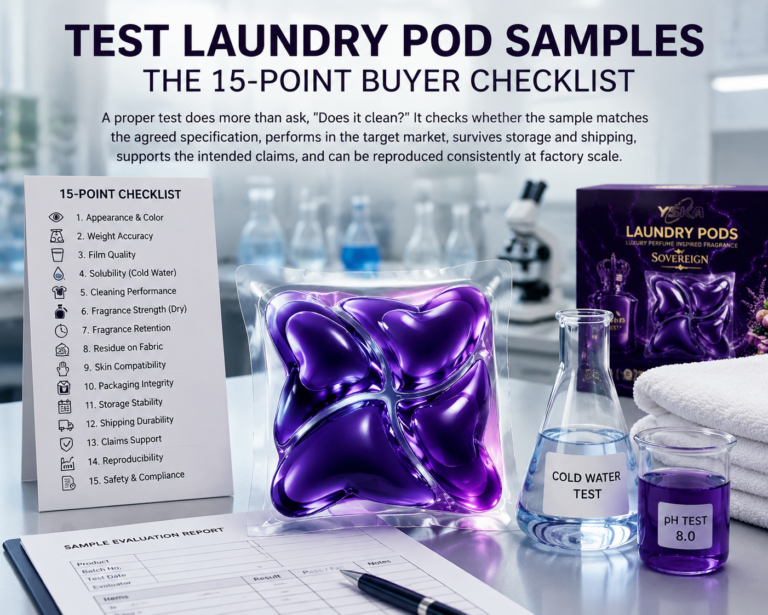
This specification becomes the reference for every test report and declaration. Buyers comparing development samples can use the 15-point laundry pod sample checklist before approving bulk production.
A practical file may contain:
The document name should include the product or formula code and revision date. Remove superseded files from the active approval folder.
Premium fragrance is central to many laundry pods, but an IFRA Certificate of Conformity has a narrow purpose.
IFRA explains that the certificate is established by the company creating the fragrance mixture. IFRA itself does not certify the finished laundry detergent, and the IFRA Standards are voluntary. The document does not replace local legal compliance or a finished-product safety assessment. Review the official IFRA certification guidance.
For each fragrance, ask for:
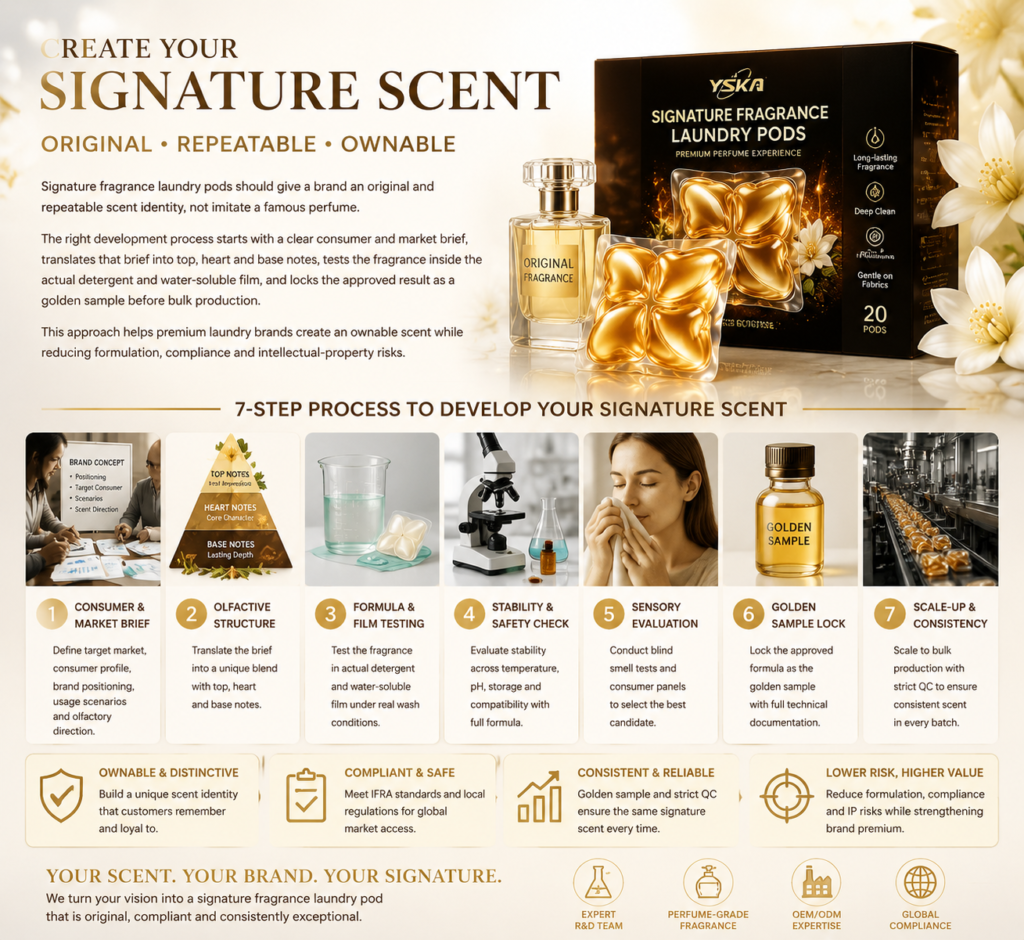
Learn more about fragrance development in YCshinec’s guide to long-lasting fragrance laundry pods.
SGS, Intertek, Eurofins, TÜV, and other laboratories can issue valuable test reports. However, a laboratory logo does not automatically make a product compliant.
Check:
A report for a blue 15g stock pod should not be presented as proof for a customized 25g multi-chamber perfume pod unless the technical connection is documented.
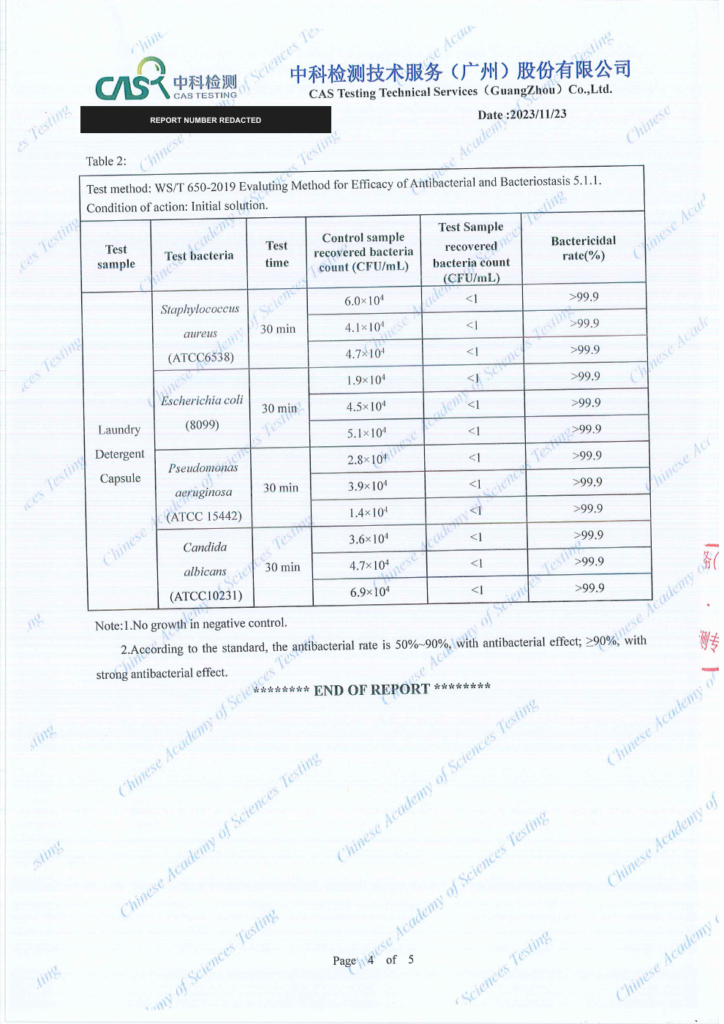
Build laundry pod certifications in stages:
Buyers planning quantities and testing units can also review the laundry pods OEM MOQ guide.
| Topic | United States | European Union |
|---|---|---|
| Universal detergent approval | No | No |
| Finished-mixture hazard label | FHSA when hazardous | CLP when hazardous |
| Soluble packet safety | ASTM F3159 voluntary standard | Specific mandatory CLP Annex II packet rules |
| Chemical import control | TSCA | REACH |
| Poison centre identifier | No EU-style UFI | UFI and PCN for hazardous mixtures in scope |
| Detergent ingredient website | California and other applicable disclosure rules | Detergents Regulation ingredient information |
| Antimicrobial claims | FIFRA registration may apply | BPR authorization may apply |
| Environmental label | EPA Safer Choice, if eligible | EU Ecolabel, if eligible |
| CE mark | Not applicable | Not required for ordinary detergents |
| Main legal duty holder | Manufacturer/importer/marketer depending on rule | EU manufacturer/importer/responsible economic operator |
Pause approval if a supplier:
Ordinary laundry pods are household cleaning products, not foods, drugs, or cosmetics. They generally do not need FDA approval. Depending on the product, the relevant U.S. authorities can include CPSC, EPA, OSHA, Customs and Border Protection, and state agencies. A supplier advertising “FDA-certified laundry pods” should explain the exact legal basis.
No. Ordinary laundry detergents are not a CE-marked product category. CE marking is used only when specific EU legislation requires it. Laundry pods must instead comply with the applicable chemical, detergent, packaging, product-safety, notification, and labeling rules.
No. An SDS communicates hazard and handling information. It does not authorize the product for sale, prove cleaning performance, confirm packet safety, or replace market-specific labels and notifications. Still, a current product-specific SDS is an essential part of most compliance files.
ASTM F3159 is a voluntary safety specification, not a general federal mandatory rule for liquid laundry packets. However, it is the key U.S. packet safety standard recognized by CPSC and is important for responsible design, testing, retailer review, and risk management.
There is no single test. For liquid consumer laundry pods, the soluble packet and outer package must satisfy specific CLP Annex II requirements. The film must meet aversive-agent, 30-second water-retention, and 300 N compression requirements, while the outer package must be opaque, reclosable, and difficult for young children to open. Hazard classification, UFI, notification, and detergent labeling are separate duties.
The UFI requirement applies to hazardous mixtures within the scope of CLP Annex VIII. A qualified assessment should determine whether the mixture is hazardous and whether a notification obligation applies. When required, the UFI must correspond to a valid poison centre notification before market placement.
No. It supports conformity of a fragrance mixture with the IFRA Standards for an intended use. It does not certify the finished detergent, replace a safety assessment, or satisfy national and regional chemical laws. The fragrance concentration and category must also match the intended product.
Not automatically. A fragrance change can affect hazard classification, allergen disclosure, formula stability, film compatibility, UFI management, and sensory performance. A technical assessor should decide which reports can be bridged and which tests must be repeated.
The commercial agreement should define the cost split. Factories often provide standard SDSs, COAs, specifications, and existing quality reports. Customized formulations, private-label artwork reviews, market-specific notifications, authorization, and new third-party testing may be charged to the buyer. The party legally responsible for placing the product on the market should control the final file.
An ordinary cleaning product using an established formula and package can move faster than a highly customized or antimicrobial product. Time is needed for formula review, sample testing, stability work, artwork, translations, notifications, and pilot production. FIFRA or BPR authorization can add substantial time. Compliance planning should begin before packaging design, not after the purchase order.
The right answer to “What certifications do laundry pods need?” is not one logo or one report. Reliable laundry pod certifications combine market-specific legal compliance, finished-product safety assessment, packaging evidence, accurate labels, supply-chain declarations, and batch-level quality control.
For the United States, buyers should focus on FHSA hazard labeling, ASTM F3159 packet safety, TSCA import duties, SDS requirements, claim substantiation, and FIFRA review when antimicrobial claims are used. State requirements, especially California ingredient disclosure, must also be considered.
For the European Union, the core framework includes REACH, CLP, the special rules for soluble liquid laundry packets, UFI and poison centre notification, detergent ingredient and dosage information, GPSR duties, and BPR authorization for biocidal products. As of July 2026, businesses should comply with the current framework while preparing for the transition to Regulation EU 2026/405 from 2029.
The most effective buying process starts with the target market and approved claims, then locks the formula, fragrance, film, packaging, and legal roles. Only after those decisions can the correct laundry pod certifications and reports be identified.
YCshinec supports private-label and OEM/ODM projects involving premium fragrance, multi-chamber designs, high-weight laundry pods, package development, sample testing, and production documentation. Explore the laundry pod product range or contact solara@ycshinec.com to discuss your destination market, formula, fragrance direction, packaging, MOQ, and required compliance file.
Post-Article Message: Use this guide as a pre-order checklist. Ask your supplier to connect every certificate, report, and declaration to the same formula code, fragrance, film, package, and market. Before printing artwork or shipping a commercial order, have the final compliance file reviewed by qualified professionals in the destination market.
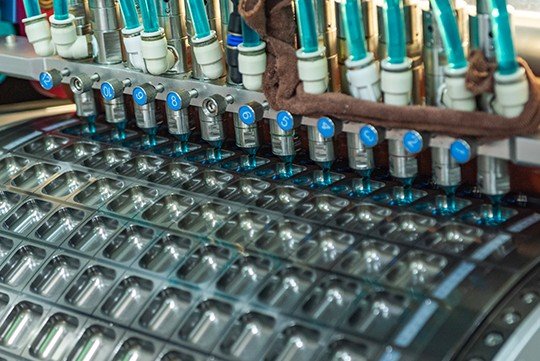
The following SHINEC factory images provide production, laboratory and quality-control context. Buyers should still verify the exact line, sample and document scope for their selected product.