Leave A Message
Tips: Kindly notice that reply of inquiry via email may went into spam, please kindly check your spam if you have sent inquiry email and do not receive replies, thank you.

Buyers comparing how long do laundry pods last should use one written specification for every supplier. The specification should identify the formula direction, unit format, package, target market, test conditions and acceptance criteria.
The approved how long do laundry pods last sample should have a code and date. Before ordering how long do laundry pods last, confirm that the quotation, artwork and test evidence refer to that same version. For how long do laundry pods last projects, any later formula, fragrance, film or packaging change should require written buyer approval.
how long do laundry pods last ? There is no responsible universal shelf-life answer because formula, water-soluble film, packaging barrier, humidity, temperature and test protocol all matter. Buyers should request stability evidence for the exact approved product.
Evaluate appearance, seal integrity, leakage, film condition, dissolution, fragrance and cleaning performance at defined intervals. Real-time and accelerated stability work should use documented conditions, while the final date code must reflect the evidence and target-market requirements.
For product-safety context, review the official CPSC liquid laundry packet guidance. Market requirements and claim evidence must still be confirmed for the exact formula, package and destination.
Laundry pods do not have one universal shelf life. Stability depends on the formula, water-soluble film, seal quality, packaging, temperature, humidity and transport conditions. Buyers should use product-specific stability data and a traceable date code instead of relying on a generic number.
Shelf life is the period during which a product is expected to remain within its approved specification when stored as directed. Relevant checks can include appearance, odor, viscosity, pod weight, film condition, seal integrity, leakage, dissolution and packaging performance.
Water-soluble film is moisture-sensitive. Humid air can make pods tacky, cloudy, deformed or more likely to stick together. Keep the primary pack closed and test the filled packaging for the intended climate.
High storage or container temperatures can accelerate fragrance loss, color change, liquid movement and film interaction. Record warehouse and shipping conditions for hot markets.
Repeated temperature changes can affect formula consistency and create condensation when packs are opened. Stability testing should reflect realistic transport and warehouse conditions.
A visually attractive pouch or tub is not enough. Review material structure, seal quality, closure performance and filled-pack compatibility. Packaging is part of the product’s stability system.
Carton strength, pack fill and pallet pattern affect whether pods are crushed during transport. Include distribution simulation or practical transit checks for new packaging.
Use batch codes and first-expiring-first-out inventory control. Retain samples so complaints can be checked against the production record.
A fresh laboratory sample cannot show long-term interactions among formula, fragrance, film and packaging. Request real-time stability data and, when used, accelerated results with a written interpretation.
| Area | Example checks |
|---|---|
| Pod condition | Shape, tackiness, clouding, leakage and sticking |
| Formula | Color, odor, separation and viscosity where applicable |
| Film and seals | Strength, brittleness, swelling and seal integrity |
| Performance | Dissolution, residue and cleaning under defined conditions |
| Packaging | Closure, moisture barrier, label and carton condition |
Use the sample testing checklist for initial evaluation, then add stability time points that match the project.
Confirm whether the market uses a manufacture date, best-before date, expiration date or another format. The date should be supported by the product’s stability basis and linked to a batch code. Avoid extending a shelf-life claim from a different formula or package.
SHINEC supports formula, fragrance, film and packaging compatibility review for OEM/ODM projects. Contact us with the destination climate, pack format and intended date claim so the stability plan can be matched to the product.
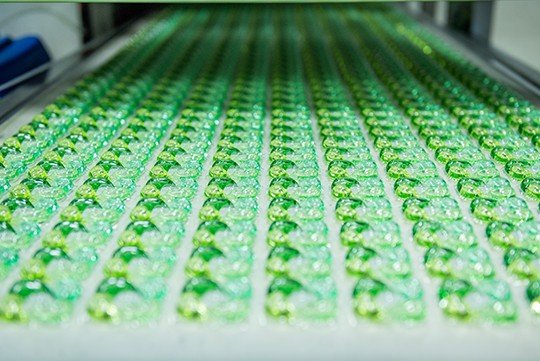
The following SHINEC factory images provide production, laboratory and quality-control context. Buyers should still verify the exact line, sample and document scope for their selected product.