Leave A Message
Tips: Kindly notice that reply of inquiry via email may went into spam, please kindly check your spam if you have sent inquiry email and do not receive replies, thank you.

Buyers comparing dishwasher pods vs tablets should use one written specification for every supplier. The specification should identify the formula direction, unit format, package, target market, test conditions and acceptance criteria.
The approved dishwasher pods vs tablets sample should have a code and date. Before ordering dishwasher pods vs tablets, confirm that the quotation, artwork and test evidence refer to that same version. For dishwasher pods vs tablets projects, any later formula, fragrance, film or packaging change should require written buyer approval.
dishwasher pods vs tablets is not only a consumer-format comparison. Private-label buyers should compare formula flexibility, dose consistency, dissolution conditions, packaging protection, production minimums and the evidence needed for planned claims.
Build the comparison around the same target wash program, water conditions, soil load, dose, packaging count and landed-cost basis. The preferred format should fit the channel and product brief instead of being selected from appearance alone.
For product-safety context, review the official CPSC liquid laundry packet guidance. Market requirements and claim evidence must still be confirmed for the exact formula, package and destination.
Dishwasher pods vs tablets is an important format decision for private-label brands, importers, distributors, and retailers. Both formats provide a pre-measured dose, but they differ in structure, formulation flexibility, manufacturing process, packaging needs, storage behavior, and customer experience.
There is no universal winner. Cleaning performance depends on the complete formula, dose, enzymes, builders, surfactants, water hardness, machine program, temperature, food soil, storage, and correct use. Buyers should compare tested products built for the same target market rather than relying on a format name alone.
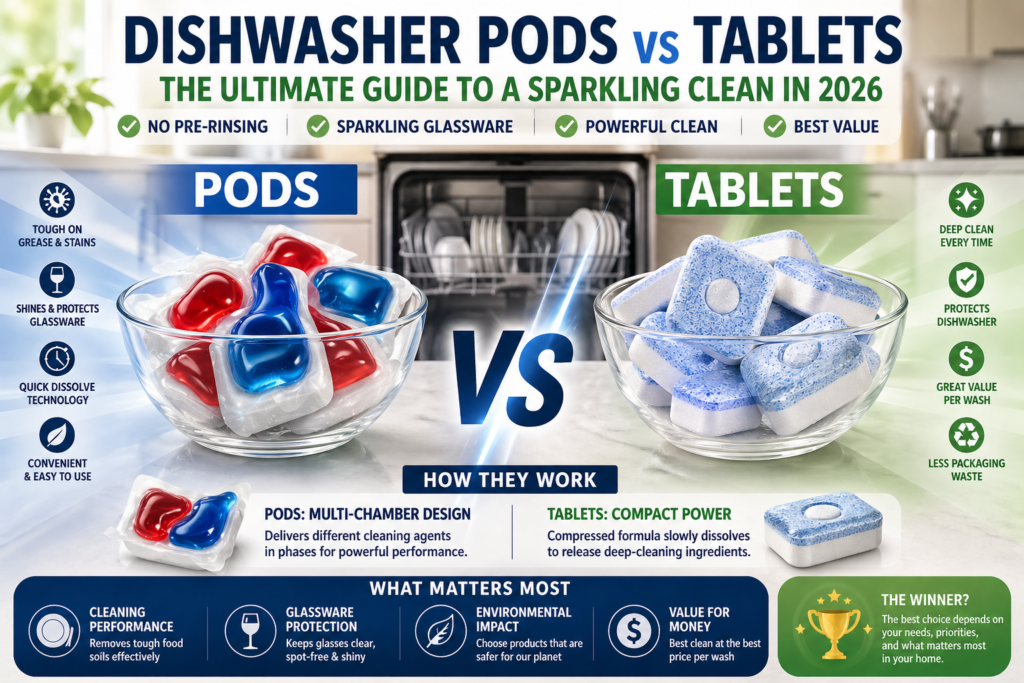
Product terminology is not always consistent across markets. In this guide, a dishwasher pod means a water-soluble film pouch containing liquid, gel, powder, or multiple separated components. A dishwasher tablet means a compressed solid dose, which may be unwrapped, individually wrapped, or coated with a dissolvable material.
Before requesting a quotation, buyers should state the required dose weight, physical structure, number of chambers or layers, formula target, fragrance, color, pack count, package type, destination market, and intended claims.
| Decision Factor | Water-Soluble Pods | Compressed Tablets |
|---|---|---|
| Product structure | Film pouch with one or more separated compartments | Compressed solid dose, sometimes layered or coated |
| Formula flexibility | Can separate selected liquid, gel, and powder components | Suited to stable compressed solid systems and layers |
| Visual differentiation | Shape, chambers, colors, and visible components | Shape, embossing, layers, speckles, and coating |
| Moisture sensitivity | Film and seals require controlled storage and packaging | Tablets can soften, swell, crumble, or react when exposed to moisture |
| Packaging | Needs strong moisture protection and suitable closure | May use cartons, tubs, or barrier packs depending on formula and wrap |
| Testing priority | Film dissolution, leakage, seals, stability, and cleaning | Dissolution, hardness, friability, stability, and cleaning |
The table describes common design differences, not guaranteed advantages. Actual performance must be confirmed on the buyer’s approved sample.
A pod is not automatically stronger than a tablet, and a tablet is not automatically more economical. The formula and dose determine how the product handles grease, starch, protein, tea or coffee stains, mineral deposits, and spotting. Enzyme type and stability, builder system, surfactants, alkalinity, oxygen bleach system, rinse-aid function, and water-softening performance all matter.
Marketing statements such as “no pre-rinse,” “works in cold water,” or “removes baked-on food” should match a defined test and the intended directions.
For pods, inspect whether the water-soluble film remains intact during storage but dissolves and releases the formula correctly in the intended cycle. Test seams, leakage, tackiness, deformation, residue, and interaction between the formula and film.
For tablets, inspect hardness, friability, chipping, dust, swelling, and dissolution. A tablet that is too soft may break during transport, while excessive hardness or unsuitable formulation can affect release under some wash conditions.
Both formats can perform poorly when stored in high humidity, handled with wet hands, placed in the wrong dispenser, or used in an unsuitable program. Package instructions and moisture protection are part of product performance.
Water-soluble pods can provide strong shelf differentiation through shape, chamber arrangement, component visibility, and color. However, every chamber and material choice increases compatibility and production-control requirements.
Tablets can be differentiated through weight, shape, layers, embossing, color, speckles, coating, and packaging. The buyer should confirm available tooling, compression capability, formula limitations, and whether custom molds or tooling fees apply.
For either format, ask what is genuinely customizable at the proposed MOQ. Separate the product MOQ from printed-packaging, mold, tooling, fragrance, and raw-material minimums. Our OEM MOQ buyer guide explains how to compare these terms.
There is no reliable fixed annual saving for pods or tablets. Cost depends on dose, formula, pack count, production quantity, packaging, testing, freight, duties, storage, sales channel, and actual cleaning performance. A lower cost per dose can be offset by poor results, damaged stock, returns, or a package that does not fit the target channel.
Request equivalent quotations and calculate total landed cost per retail pack and per wash. Include product, packaging, printing, molds or tooling, samples, testing, inspection, freight, insurance, duties, customs charges, warehousing, marketplace or distributor margins, and contingency.
Both formats require protection from moisture and physical damage. For pods, verify barrier performance, closure, film-to-package compatibility, and resistance to leakage or deformation. For tablets, verify resistance to humidity, crumbling, abrasion, and breakage.
Test the finished product in the proposed bag, tub, or box. Confirm pack count, closure, tamper evidence where required, label space, directions, warnings, batch coding, carton strength, pallet pattern, and transport conditions. Avoid environmental claims based only on the package appearance; claims need appropriate evidence for the market.
Compliance depends on the formula, packaging, claims, and destination country. Request documents for the actual product version, which may include a specification, Safety Data Sheet, ingredient information, test reports, supplier declarations, label data, and packaging information.
Review child-safety, accidental exposure, handling, storage, labeling, and claim requirements with qualified local support. A general factory certificate does not prove that every product configuration is approved for every market.
Choose water-soluble pods when the brand strategy values a distinctive multi-component appearance, convenient handling, and a formula architecture suited to the film system. Choose tablets when the desired formula and positioning suit a compressed solid dose, the supply chain supports tablet production, and the package protects the product adequately.
The final choice should follow sample evidence, manufacturing capability, compliance, landed cost, packaging, customer expectations, and sales-channel fit. Buyers can review SHINEC’s dishwasher pod product range before preparing a specification.
No. Format alone does not determine performance. Compare the complete formula and dose under controlled, relevant wash conditions.
It depends on specification, order quantity, packaging, freight, duties, and performance. Use current equivalent quotations and a full landed-cost calculation.
Not automatically. Package barrier, closure, strength, compatibility, and label requirements should be tested with the actual product.
The most useful dishwasher pods vs tablets comparison uses equivalent product briefs, controlled testing, clear documents, and total landed cost. A private-label buyer should approve the complete product and package rather than choosing from a headline claim.
To discuss an OEM/ODM dishwasher detergent project, contact SHINEC with your destination market, preferred format, performance target, pack count, expected quantity, and launch schedule.
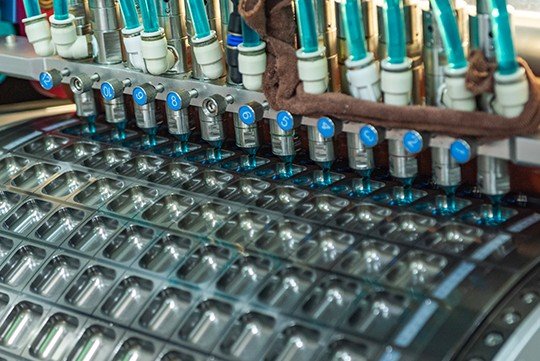
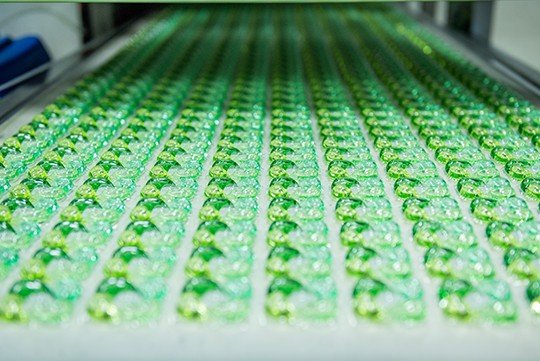
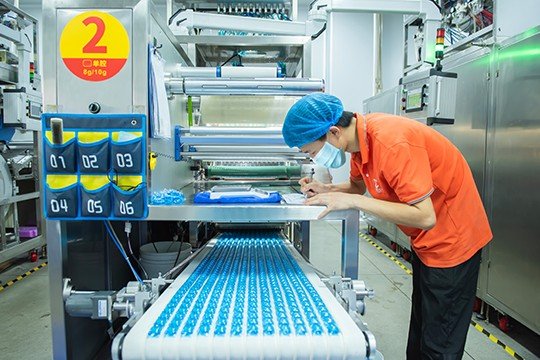
The following SHINEC factory images provide production, laboratory and quality-control context. Buyers should still verify the exact line, sample and document scope for their selected product.