Leave A Message
Tips: Kindly notice that reply of inquiry via email may went into spam, please kindly check your spam if you have sent inquiry email and do not receive replies, thank you.
Buyers comparing laundry pods OEM factory in China should use one written specification for every supplier. The specification should identify the formula direction, unit format, package, target market, test conditions and acceptance criteria.
The approved laundry pods OEM factory in China sample should have a code and date. Before ordering laundry pods OEM factory in China, confirm that the quotation, artwork and test evidence refer to that same version. For laundry pods OEM factory in China projects, any later formula, fragrance, film or packaging change should require written buyer approval.
laundry pods OEM factory in China na should be evaluated against the exact product brief, not only a company presentation. Buyers need current production evidence, coded samples, quality records, relevant documents and transparent commercial terms.
Verify legal identity and production capability, then compare sample traceability, formula and film controls, packaging systems, test scope, inspection criteria and written change management before approving the first bulk order.
For product-safety context, review the official CPSC liquid laundry packet guidance. Market requirements and claim evidence must still be confirmed for the exact formula, package and destination.
Selecting a laundry pods OEM factory is a weighted decision, not a certificate-counting exercise. Compare product fit, sample performance, quality controls, documentation, packaging capability and commercial execution. Use the five-step scorecard below to create a defensible shortlist.
Start with the destination market, target consumer, pod format, weight, fragrance direction, pack size, claims and sales channel. A factory experienced in standard single-chamber pods may not be the best fit for a premium multi-chamber or luxury-fragrance project.
| Question | Evidence to request |
|---|---|
| Can the factory make the required pod structure? | Line capability, current samples and production examples |
| Can it support the fragrance brief? | Coded fragrance samples and applicable safety documents |
| Can it make the packaging? | Material specification, artwork process and filled-pack testing |
| Does it understand the target market? | Relevant document process and label-review capability |
Test coded samples under the same conditions. Score cleaning, dissolution, residue, leakage, seal integrity, appearance and dry-fabric fragrance. Repeat important tests and keep the approved sample. Do not select a factory from an unopened sample’s scent alone.
Use the 15-point buyer sample checklist to record the decision.
Review incoming-material control, batch records, fill-weight checks, seal inspection, leakage and dissolution testing, packaging inspection, calibration, retained samples and complaint handling. Confirm how the factory controls heat and humidity around water-soluble film.
For warning signs and legal-identity checks, use the seven factory red-flags guide.
Request only documents relevant to the formula, claims and market. These may include a safety data sheet, certificate of analysis, composition information, fragrance documents, test reports and label data. Check applicant, sample, date, method, scope and conclusion.
Examples of SHINEC’s COA and third-party materials are available in the certificate gallery. Sensitive report numbers, customer data and proprietary formula information should be redacted from public copies. Project documents must match the approved formula.
Compare the same specification and Incoterm. Separate pod, printed film, pouch or tub, label, carton, testing, tooling and freight-related costs. Confirm payment terms, packaging MOQ, artwork ownership, change control, inspection and remedies for nonconforming goods.
Use the OEM MOQ guide to identify packaging quantities that may be different from the pod production MOQ.
| Category | Suggested weight | What to score |
|---|---|---|
| Product fit | 25% | Formula, pod structure, fragrance and packaging capability |
| Sample performance | 25% | Cleaning, dissolution, leakage, residue and scent |
| Quality system | 20% | Process controls, records, traceability and retained samples |
| Documents | 15% | Relevance, validity, scope and response quality |
| Commercial execution | 15% | MOQ, total scope, communication, terms and change control |
Adjust the weights for your risk. A brand with a complex fragrance claim may assign more weight to testing and document support. A buyer launching several SKUs may assign more weight to packaging and change control.
SHINEC supports OEM/ODM laundry pod projects including premium fragrance development, formula options, coded samples, private-label packaging and document review. Send your scorecard and product brief so our response can be evaluated against the same criteria as every other shortlisted supplier.
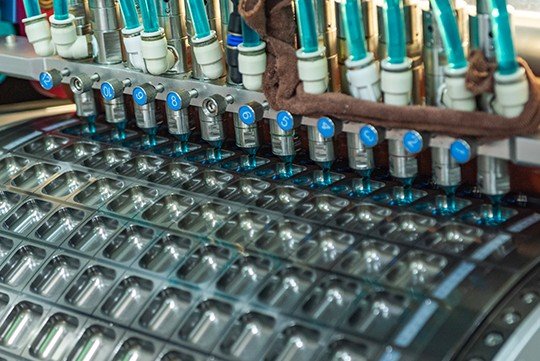
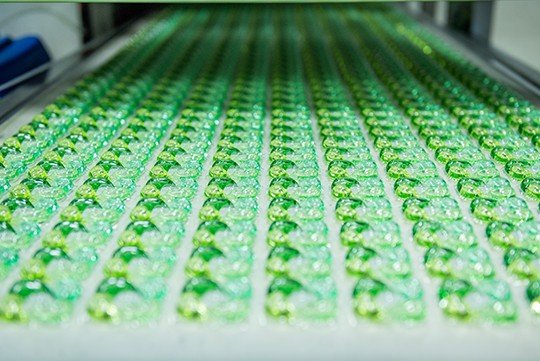
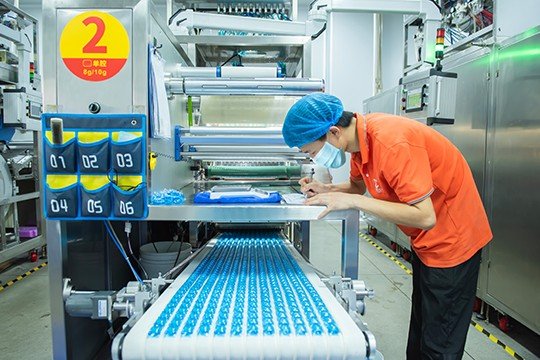
The following SHINEC factory images provide production, laboratory and quality-control context. Buyers should still verify the exact line, sample and document scope for their selected product.