Leave A Message
Tips: Kindly notice that reply of inquiry via email may went into spam, please kindly check your spam if you have sent inquiry email and do not receive replies, thank you.

Buyers comparing laundry pods for sensitive skin should use one written specification for every supplier. The specification should identify the formula direction, unit format, package, target market, test conditions and acceptance criteria.
The approved laundry pods for sensitive skin sample should have a code and date. Before ordering laundry pods for sensitive skin, confirm that the quotation, artwork and test evidence refer to that same version. For laundry pods for sensitive skin projects, any later formula, fragrance, film or packaging change should require written buyer approval.
laundry pods for sensitive skin should be evaluated through the complete formula, intended user group, exposure conditions and evidence supporting each claim. Removing one fragrance or dye does not automatically prove hypoallergenic, eczema-safe or dermatologist-approved performance.
Review fragrance and dye choices, ingredient restrictions, dosage, rinse conditions, packaging warnings and the exact method behind any skin-related evidence. Claims must remain limited to the tested formula and destination-market rules.
For product-safety context, review the official CPSC liquid laundry packet guidance. Market requirements and claim evidence must still be confirmed for the exact formula, package and destination.
Laundry pods for sensitive skin should be evaluated as evidence-based, low-residue product concepts, not as products that can promise “no rash” or treat a skin condition. For a private-label buyer, the practical priorities are a clearly defined fragrance and dye policy, full formula disclosure, appropriate safety documentation, controlled sample testing, accurate claims, and packaging that reduces accidental exposure.
This buyer guide explains what to request from an OEM/ODM laundry pod manufacturer before approving a sensitive-skin product. It is written for brands, importers, distributors, and retailers rather than as medical advice. Individual sensitivities vary, so no detergent can guarantee that every consumer will avoid irritation.

A sensitive-skin concept is usually built around reduced unnecessary exposure and better substantiation. Depending on the target market and brand position, this may mean fragrance-free and dye-free variants, carefully selected surfactants and preservatives, controlled enzyme choices, efficient rinsing, and transparent labeling.
“Gentle,” “hypoallergenic,” and “dermatologist tested” are not interchangeable. They also do not automatically prove that a product is suitable for every person. Before using any of these claims, the buyer should define the claim, identify the supporting test or review, and confirm that the wording is permitted in the destination market.
Give the manufacturer a written brief instead of asking only for a “mild formula.” A useful brief should state the destination country, target consumer, desired cleaning level, water conditions, washing temperatures, fragrance policy, color policy, enzyme preference, sustainability goals, pod weight, chamber design, packaging format, and target retail price.
For many sensitive-skin projects, fragrance-free and dye-free are the clearest starting points. The American Academy of Dermatology advises fragrance-free and dye-free laundry detergent in some eczema-care guidance. That does not make a detergent a treatment, but it supports a cautious development approach. See the AAD guidance on eczema-friendly products.
If a brand wants a scented version, request the fragrance documentation available from the fragrance supplier, allergen information required for the target market, dosage level, and stability data. “Unscented” and “fragrance-free” should not be used casually; the formula and claim must match.
Do not evaluate ingredients through a simplistic “chemical versus natural” lens. Surfactants provide cleaning, enzymes can improve stain removal at lower temperatures, and preservatives may protect a water-containing formula. The correct question is whether each ingredient is necessary, used at an appropriate level, compatible with the complete formula, and disclosed as required.
Ask the manufacturer for the ingredient list, raw-material specifications, Safety Data Sheet where applicable, allergen or restricted-substance information, and the reason for each functional ingredient. A “free-from” statement should be verified against both the formula and relevant raw-material data.
A gentle positioning cannot compensate for poor dissolution or incorrect dosing. Film that does not dissolve, overdosing, overloading the drum, or placing a pod in the wrong location can affect wash performance and residue. Buyers should test complete products in realistic wash conditions rather than judging only the liquid concentrate.
Use our 15-point laundry pod sample testing checklist before approving bulk production.
The evidence package should match the product, claim, and destination market. There is no single certificate that makes a sensitive-skin laundry pod compliant everywhere. A practical supplier file may include:
For a market-by-market overview, read our US and EU laundry pod compliance guide.
Claims should describe verifiable product characteristics. Avoid absolute or medical wording such as “no rash,” “eczema treatment,” “guaranteed non-irritating,” “toxin-free,” or “safe for everyone.” These statements are difficult or impossible to substantiate and can create regulatory, platform, and customer-trust risks.
| Claim Direction | What the Buyer Should Verify |
|---|---|
| Fragrance-free | No intentionally added fragrance and wording consistent with the formula and market rules. |
| Dye-free | No intentionally added colorants and supporting raw-material review. |
| Hypoallergenic | A defined standard, suitable test design, result, population, and legally reviewed wording. |
| Dermatologist tested | Who supervised the test, protocol, sample size, product version, result, and exact permitted claim. |
| Suitable for sensitive skin | Formula rationale, product testing, careful qualification, and no universal guarantee. |
Concentrated liquid laundry packets can cause serious harm if swallowed or exposed to the eyes. The U.S. Consumer Product Safety Commission advises keeping packets sealed in their original packaging and out of children’s sight and reach. Buyers should review package closure, warning communication, leakage resistance, film strength, and destination-market requirements. See the CPSC liquid laundry packet safety page.
Child-resistant does not mean childproof. Packaging and label claims should be reviewed by a qualified compliance professional for the country where the product will be sold.
SHINEC supports private-label and OEM/ODM laundry pod development with formula customization, pod structure, packaging, sample evaluation, and production planning. Learn about our private-label laundry pod process or request a project discussion.
No product can guarantee suitability for every individual. Careful formula design, accurate claims, appropriate testing, and correct use can reduce avoidable risks, but consumers with persistent symptoms should seek advice from a qualified healthcare professional.
No. Fragrance-free describes one formulation characteristic. Hypoallergenic is a separate claim that requires a clear definition and suitable evidence for the market where it is used.
Not automatically. The decision should consider cleaning goals, enzyme type and level, overall formula design, product testing, claim strategy, and local requirements. Buyers should review the complete product rather than judge one ingredient in isolation.
Approve a documented production specification and signed reference sample after realistic wash, residue, stability, leakage, and packaging tests. This creates a clear standard for bulk-production quality control.
The best laundry pods for sensitive skin are not identified by dramatic promises. For private-label buyers, a stronger product is built through a precise brief, transparent formula review, realistic sample testing, defensible claims, safe packaging, and controlled production. That evidence-led process supports both consumer trust and long-term brand value.
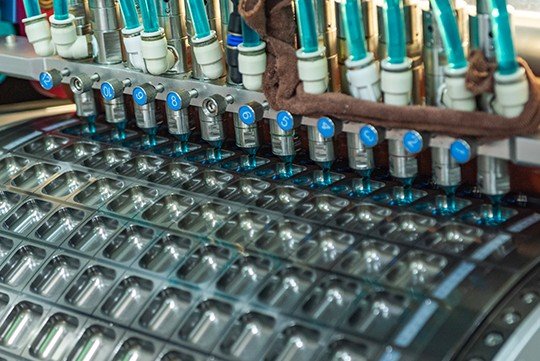
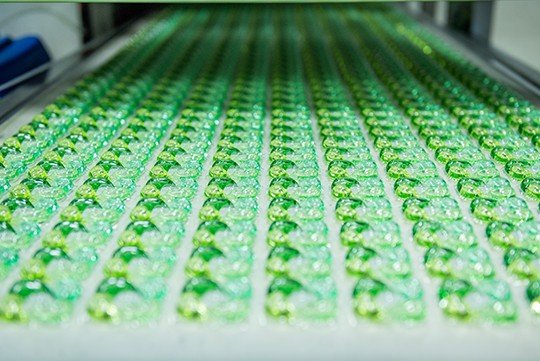
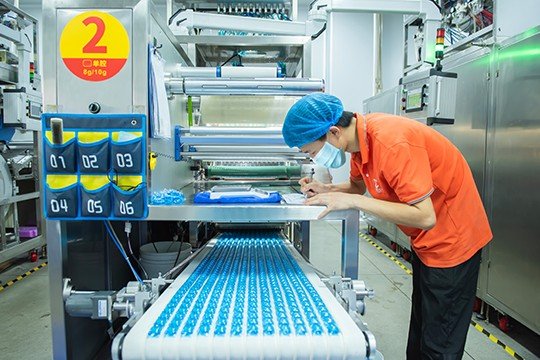
The following SHINEC factory images provide production, laboratory and quality-control context. Buyers should still verify the exact line, sample and document scope for their selected product.